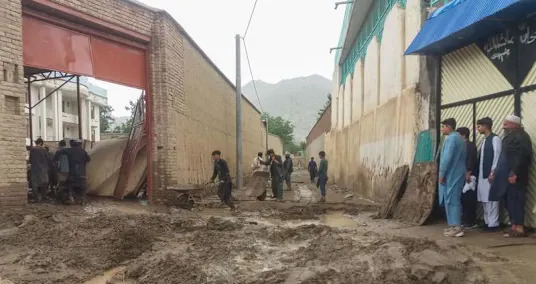
At least 61 people have been killed and 116 injured across Afghanistan since March 26 due to heavy rainfall, floods, landslides and lightning strikes, the Afghan government said on Saturday.
At least four people were still missing after floods affected thousands of families and damaged 2,448 houses, Afghan government spokesman Zabihullah Mujahid said in a post on X.
In addition, thousands of hectares of cropland was also destroyed, posing serious risks to rural communities who rely on agriculture for their livelihoods.
Deadly flooding has struck Afghanistan repeatedly in recent years, causing significant loss of life, injuries and widespread damage to homes, infrastructure and agricultural land.
Extreme weather events such as flash floods and droughts are increasing in Afghanistan, which experts link to the climate crisis.
Despite having a negligible carbon footprint, the country ranks among the most climate-affected nations and remains ill-prepared to cope after decades of conflict, poor infrastructure and a struggling economy, compounded by recent earthquakes and severe flooding.
LATEST POSTS
- 1
 Well known Tea Brands for Each Tea Sweetheart
 - 2Artemis moon mission breaks record for distance from Earth
- 3Dave Coulier shares new cancer diagnosis 1 year after revealing previous diagnosis
- 4Ukraine's new defense minister just outlined how dire its troop shortage has become
- 5Nepal’s youngest premier sworn in after releasing new rap song about unity





- New findings suggest atmosphere could exist on exoplanet TOI-561b
- Is Chinese food truly flavorful?
- NATO official says members often aren't buying weapons together, and it's a mistake
- Midlife weight gain can start long before menopause – but you can take steps early on to help your body weather the hormonal shift
- Figure out How to Alter Your Volvo XC40 for Further developed Solace
- The 12 biggest space stories of 2025 — according to you
- One third of Spanish pork export certificates blocked since swine fever outbreak, minister says
- Members of Kenya-led security mission in Haiti were involved in rapes, U.N. says
- 25 of the world’s best sandwiches