
JPMorgan Chase CEO Jamie Dimon warned in his annual letter to shareholders that the war in Iran could lead to more stubborn inflation as well as higher interest rates than what the market is currently anticipating.
Dimon's letter was released Monday in conjunction with JPMorgan's annual report for 2025 and said that the Iran war may cause energy shocks along with disruptions to global supply chains that could cause inflation to remain higher than expected.
Inflation that persists above the Federal Reserve's 2% and rises further from its already elevated level could also prompt the central bank to raise interest rates to slow the pace of price growth.
"Now, because of the war in Iran, we additionally face the potential for significant ongoing oil and commodity price shocks, along with the reshaping of global supply chains, which may lead to stickier inflation and ultimately higher interest rates than markets currently expect," Dimon wrote.
Ny Fed President John Williams Warns Iran-driven Oil Spike Could Ripple Through Economy
Dimon said that the foremost risks facing financial markets and the economy are geopolitical in nature, including the Iran war and Russia's war in Ukraine, as both conflicts have an "impact on countries and economies across the globe that are not directly involved in war."
"Nations that are heavily dependent upon imported energy are already seeing the effects. And it's not just energy, it's commodity products that are byproducts of oil and gas, like fertilizer and helium. And given our complex global supply chains, countries are experiencing disruptions in shipbuilding, food and farming, among others," Dimon wrote.
"The outcome of current geopolitical events may very well be the defining factor in how the future global economic order unfolds – then again, it may not," he added.
Dimon said that while the most important outcome of those conflicts should be the "proper resolution of the current wars and, ultimately, peace on Earth, we do need to understand and track the economic effects" of those conflicts and the risks they pose.
Powell Warns Of New Energy Supply Shock As Gas Prices Surge: 'No One Knows How Big It Will Be'
He said that a "bad confluence of events" can generally cause some degree of a recession accompanied by high credit losses and market volatility, as well as lower asset prices and elevated unemployment, though it could play out in different ways in different places.
LATEST POSTS
- 1
 Russian billionaire says 12-hour days and 6-day workweeks could help save the economy
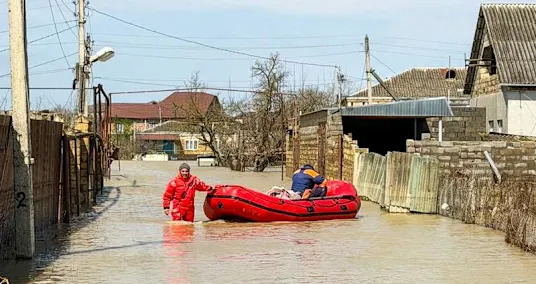
 - 2Two die and thousands homeless after flooding hits Russia's Dagestan
- 3The most effective method to Alter Your Savvy Bed for A definitive Rest Insight
- 4NASA releases new photos of interstellar comet 3I/ATLAS
- 5Carry Nature Inside with These Staggering Plant Decisions



- ‘Downton Abbey: The Grand Finale’ hits streaming: How to watch, cast info and everything you need to know
- Share your pick for the riding area that characterizes your surf undertakings!
- Support Your Wellness: 20-Minute Home Exercises That Work
- As tetanus vaccination rates decline, doctors worry about rising case numbers
- Recalled Super Greens diet supplement powder sickens 45 with salmonella
- 6 Solid Moving Administrations for a Calm Movement
- Step by step instructions to Appropriately Keep up with Your Sunlight powered chargers for Most extreme Productivity
- ‘Wicked: For Good’ streaming release — How to watch the sequel starring Ariana Grande and Cynthia Erivo
- Monetary Strengthening: Assuming Command over Your Cash


