
Trade unions and employers in Germany have started collective bargaining negotiations for public-sector employees in most federal states with seemingly irreconcilable differences.
The aim is not only to achieve inflation compensation, but also a real wage increase, said Verdi trade union boss Frank Werneke immediately before the start of talks in Berlin on Wednesday.
Verdi and the civil servants' union dbb, is negotiating with the TdL association which represents Germany's federal states.
The unions want a 7% pay increase, or at least €300 8$348) per month, for public-sector employees.
The TdL negotiator, Hamburg's Finance Senator Andreas Dressel, has rejected the demand as too high.
Meanwhile, dbb boss Volker Geyer told dpa: "We are counting on constructive negotiations." But if employers refuse to cooperate and do not submit an offer, pressure will have to be increased.
"Then actions and strikes are conceivable in many areas, for example in road maintenance services, among employees of the state police forces, university hospitals or in financial administration," said Geyer.
Three rounds of negotiations are planned with the the third scheduled for February 11-13 in Potsdam.
According to Verdi, about 925,000 public-sector employees and 1.3 million civil servants are affected.
LATEST POSTS
- 1
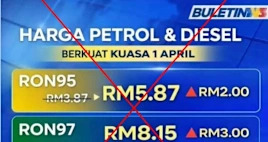
 False fuel prices in fabricated graphics circulate in Malaysia as Iran war continues
 - 2SpaceX's 1st 'Version 3' Super Heavy Starship booster buckles under pressure during initial tests
- 3They died 'doing what they loved': The stories of workers in their 80s who died on the job
- 4Blue Origin safely launches wheelchair user to space and back
- 5More charges filed against ex-left-wing RAF member Daniela Klette


- Computerized Strengthening d: A Survey of \Upgrading Efficiency\ Programming Application
- Extraordinary Shows to Long distance race on a Plane
- A Pompeii site reveals the recipe for Roman concrete. It contradicts a famous architect’s writings
- How C-reactive protein outpaced ‘bad’ cholesterol as leading heart disease risk marker
- Merz visit highlights new strategic, and strained, Germany-Israel bond
- Is Chinese food truly flavorful?
- Overlooked infertility care should be part of national health services, says WHO
- IDF: Staying in West Bank refugee camps will quell lone-wolf terror
- King Charles III says he is reducing cancer treatment schedule in 2026


