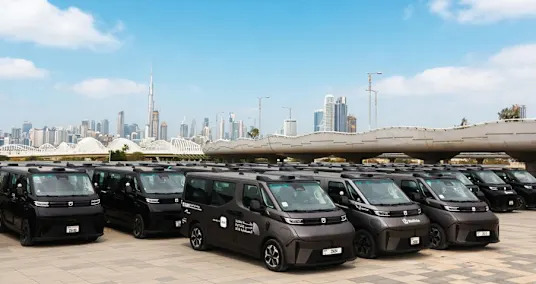
The dream of driverless taxis continues in the Gulf, where the conflict with Iran has slowed but not stopped progress on autonomous transport in Abu Dhabi, Dubai, and Riyadh.
Uber and WeRide added another driverless route in Saudi’s capital this week, linking shopping centers Hayat Mall and Riyadh Gallery. The expanded service comes after the vehicles completed more than 1,700 trips in a trial phase, according to the regulator.
Uber and WeRide have also launched fully driverless services in Dubai, beginning in popular residential and commercial areas Jumeirah and Umm Suqeim, with no safety monitor on board. Separately, Dubai Taxi Company plans to deploy more than 1,000 driverless cars in the city with Baidu’s Apollo Go, starting with a fleet of 50 this year. Earlier this month, Autogo, part of Abu Dhabi-backed technology company K2, began offering rides on Yas Island, and it plans to expand to Saadiyat and Al Maryah islands.
All this is bad news for the region’s taxi drivers, a largely South Asian group whose business is already down due to the conflict with Iran.
LATEST POSTS
- 1
 Vote in favor of your Favored kind of pasta
 - 2Dutch police probe a small blast outside a pro-Israel Christian center
- 3Step by step instructions to Utilize Open Record Rewards for Your Potential benefit
- 4Manual for Tracking down the Nearby Business sectors and Marketplaces
- 5Keep It Cool: Uncovering Famous Fridge Brands for Each Home


- German inflation soars to 2.7% in March as Iran war drives up prices
- The most effective method to Pick the Ideal Shrewd Bed for Your Special Rest Needs
- German-Polish man charged with calling for attacks on top politicians
- From Representative to Business visionary: Private issue Victories
- Mummified cheetahs found in Saudi caves shed light on lost populations
- Skeleton of famed musketeer possibly found in Dutch church
- Sought-After Extravagance Ocean side Objections for a Lovely Escape
- Journalists killed by Israeli strike in southern Lebanon
- 'Zootopia 2' movie reviews: A heartwarming, hysterical and earnest 'ode to community'